
By Giana Longo
Photography by Susan Beard Design
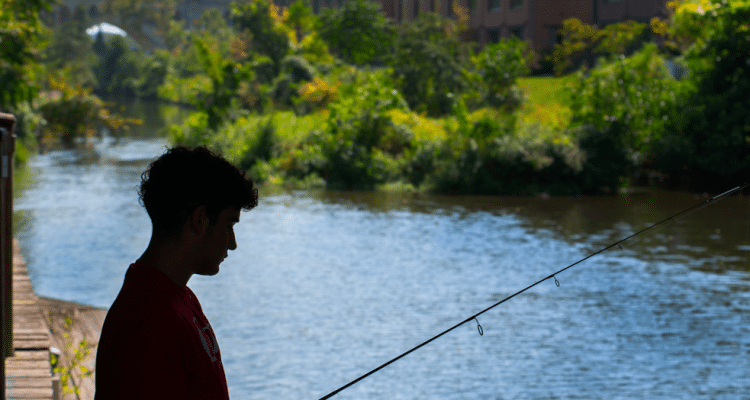
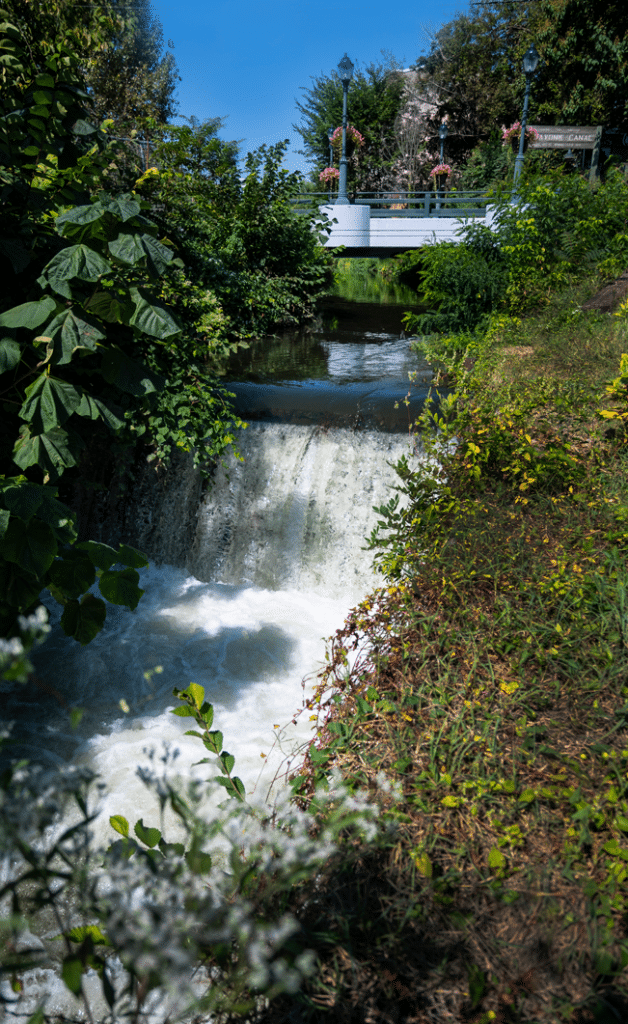
If you walk along the Manayunk Canal—the narrow stretch of water mostly hidden behind Main Street—you’ll find that it looks the way it’s seemingly always looked: a commonplace water feature to view while biking, running, and fishing.
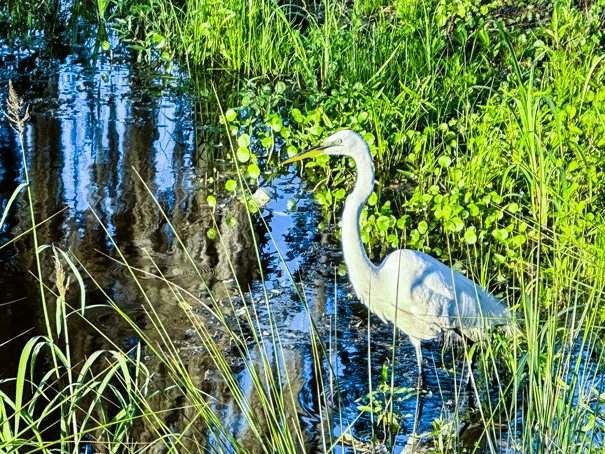
Its walls contain a narrow stream of water home to various plants and animals that will on occasion peek their heads out to say hello. Eastern painted turtles lounge on logs to warm themselves in the mid-day sun while red bellies lazily swim about. Blue herons strut among the grasses. Great egrets preen their wings before dipping their heads for a snack. Along the nearly two-mile stretch, gizzard shad dance near the surface fighting the current. And if you stop to peer down, you’ll see through the clear water to the rocks and shadows where larger fish linger, waiting for a treat.
Maybe the Manayunk Canal isn’t the same as it’s always been. Maybe these are the beginnings of a new life for what was once the epicenter of an up-and-coming industrial behemoth. Maybe it’s time to take another look.
History: A Ticker in Time
Today Manayunk is known as a bustling neighborhood of Philadelphia, home to the abundance of restaurants, businesses, bars, and art that Main Street boasts. However, if it were not for the less than two-mile-long waterway that was once at risk of becoming a parking lot, many residents’ favorite corner pubs might never have been.
“It all started back when coal became a sought-after fuel for home heating,” Harry Garforth historian and author of Rails Through Manayunk, explained of the canal’s creation. “And so, the challenge was mining and moving the coal to market. The first method of operation to do that was the canal.”
Navigating coal barges down the fast-moving waters and unpredictable currents of the Schuylkill was challenging and dangerous. According to Roxborough Manayunk Wissahickon Historical Society: “In 1815 the Pennsylvania Legislature chartered the Schuylkill Navigation Company to build a system of canals, dams, and slackwater pools along the Schuylkill River from Philadelphia to the coal mining region at Pottsville, Pennsylvania.” By 1825, the first boatload of coal arrived in Philadelphia.
It didn’t take long before the canal became much more than a means of efficient transportation. “This is before PECO,” Garforth said. And so the waterway started supplementing coal to power the mills that continued to take root in the area.
In 1819, one mill sat on Venice Island and 60 residents occupied the town. By 1828, 10 mills operated, and the population had increased to nearly 1,100. Within a few short years, the simple nautical navigation advancement transformed a Philadelphia outskirt into a booming location for industrial expansion. The canal was the heartbeat of the business center, delivering power for more business and people to further develop and strengthen the local economy.
Keeping up with increased industrial demands proved to be challenging. In the harsh northeast winters, the canal’s slow-moving water would freeze, delaying deliveries. Labor strikes plagued progress. Man-power limitations stalled operations. A newer, faster delivery process was needed, and the railroad company jumped on the opportunity to steamroll through town, acquiring the canal and leveraging its waterpower until a rail line that ran through Philadelphia to the Delaware River was completed in 1842.
For a while, both the railroad and the canal operated in conjunction with the canal mainly functioning as a means of power for the mills. But in time, more efficient electric alternatives took over, and the necessity of the canal subsided. By 1940, the once revolutionary waterway ceased operations, and the dam was closed off.
For roughly two decades the Manayunk Canal sat mostly unattended, and in the late 60’s people began discussing what to do with the forgotten piece of history. In the end, a Manayunk resident, Henry Olson, who passed in 2020, advocated to save it. He has visions of stabilizing the structure and constructing a bike path alongside it, renovating the canal into an intentional amenity.
Modern History: The Canal Kept at the Core
Over time runoff and debris transformed the closed canal into something of an everyday nuisance as, filled with stagnant water and overgrown vegetation. But not long ago it was Manayunk’s neighborhood backyard: a place to spend time, see friends, and enjoy yourself. Some still remember it. Some like Joe Zajko.
Through and through a true “Yunker,” as he says, Zajko’s been in the Manayunk area all his life, and his heritage dates back even further. Zajko’s maternal grandfather worked at Keely Lumber as a log ripper; his paternal grandfather, a polish immigrant, was a local leather smith married to a Polish seamstress. Growing up, Zajko’s father worked at Connelly Containers, a paper box company planted on the Schuylkill, loading and unloading the trucks. Like many, their livelihoods were closely entwined with the canal.
Today, Zajko carries on the family tradition of working locally. By day he’s a licensed contractor—owner of ZBC General Contracting—but in his spare time he’s a professional fisherman, master angler, and owner of O’Dogz Bait & Tackle. His love and mastery of fishing can be credited to the Manayunk Canal.
Zajko recalls growing up on Manayunk Ave. and spending a lot of time at the bottom of the hill. “Even as kids we all used to hang out in groups with our bikes, Zajko said. “We would throw our rods on the bikes—and we used to tape PVC pipe to the back of the bike so we could put our rod in there as a rod holder—and we all used to ride over to the canal and fish for the day.” He’d stay as long as the streetlights were on, then race home to golabki his grandmother had waiting for him on the table
In his experience growing up in the 80’s and 90’s, the canal was an ideal fishing spot for him and his buddies. “That was like the main spot for carp back in the day,” Joe said. “You could get carp up to four and a half feet—thirty- forty-pounders, no problem.”
But todays it’s much different now than when he was a boy. “It changed over the years because [it] filled up with junk and trash” he said. Along with those who’ve spent significant time in Manayunk, Zajko’s watched the water grow darker and cloudy, and he’s seen the negative impacts afflicting it and the fish populations. “I haven’t seen with my own eyes I would say gizzard shad in about 15 years.”
Piling up debris is not the only ailment plaguing the canal. Over time, it has become an almost uninhabitable environment. In the warmer months, poor water quality has brought massive fishkills, thick algae mats have covered the surface of the water, and the familiar stench of decaying vegetation wafts all the way up the street.
“It was more of an eyesore than an amenity,” Lance Butler, a Philadelphia Water Department (PWD) Senior Scientist, said of its state when he was first introduced to the waterway during his first week on the job in 1998.
That is until now.
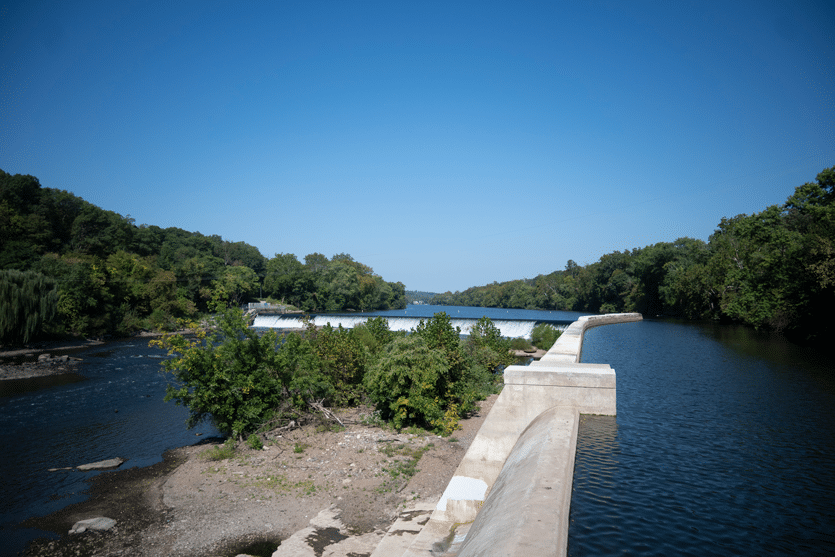
In mid-April, a group gathered at the mouth of the Manayunk Canal’s intake structure for a ribbon-cutting celebrating the completion of the Flat Rock Dam Project, an effort by PENVEST—Pennsylvania’s infrastructure fund—and the Philadelphia Water Department (PWD) to reconnect the Manayunk Canal to the Schuylkill. Upon completion, the project reopened the gates to the Manayunk Canal, allowing moving water to flow through its historic structure for the first time in 85 years—nearly two centuries after its original opening in 1825.
The initial plans for the project sparked in the 90’s when a structural inspection of dam’s wall revealed it was not meeting dam safety criteria and was in imminent danger of failing. However, various additional factors, including ecology, marine debris, historic value, and increased public interest in its aesthetic appeal, compiled to further catalyze the project.
Satisfying the needs of the environment and the community wasn’t easy. Butler explained how he and the team had to craft a strategy that was “totally comprehensive,” enlisting engineers, scientists, and planners to address water quality, human health and safety, and cultural components. The finalized project included dredging, masonry repairs and stabilization, historic preservation, and structure construction, in addition to restoring water flow and improving water quality.
Part of what made the project so essential was the location of the canal in relation to two of Philadelphia’s three water plants that intake water from the Schuylkill. “Restoring river flow into the canal also means that we are improving the watershed as the drinking water source for the city,” Ian McKane, a PWD Project Engineer, explained.
But water movement is only one of the ways the department is working to improve water quality. Butler and his team have also introduced a series of freshwater mussels to the canal, aiming to filter out metal and waste as the mussels mature and reproduce. The creatures serve a dual purpose, working also to help reestablishing various species in an area where they once were abundant.
Shannon Boyle, a PWD Graduate Environmental Scientist working in the canal, said that prior to the introduction of the mussels and water flow, Manayunk maintained an unhealthy system. However, in a few short months, much has changed.
“Getting to see it through a full seasonal calendar essentially, and how much has changed between one season not having flow and a couple months of having flow—it is a completely different system,” Boyle said of the restored water movement.
In addition to the improvements made to the water system itself, part of the project at the Flat Rock Dam site was about stabilizing and preserving the lock 68 canal gate house intake structure from the original 1825 Schuylkill Navigation System. Now visible from the Schuylkill, there is also signage talking about the 200 years of history there and the improvements made as part of this project to restore flow.
“It’s certainly a sight to see when you’re walking on the trail,” Kane said.
Beating Onward
After its reopening in the spring, many improvements were almost immediate, but it will take some time for the memory of the canal’s former state to fade away.
“Prior to it being opened up again, it was kind of a stagnant pit,” Kathrine Sykora, former head of the Manayunk Development Corporation, stated of the years the canal sat, mostly unattended, collecting trash and water runoff. She was one of the early advocates who maintained pressure for the project to be completed.
According to Butler, there were plenty of “false starts” and setbacks, but Sykora pushed him. “She held me accountable and that’s the reason why I kept on going,” Butler said. “I didn’t give up when she held my head to the grindstone and kept on checking in, checking in, checking in.”
Though it took time and determination, the positive outcomes and success of the work completed is evident. “The water’s completely different,” Sykora said. “And that just changes the appeal of the area along the trail area.”
Along with happier neighbors and healthier vegetation, the wildlife is thriving in and on the water. “We’re seeing a huge resurgence of species of fish—that you know, either inhabited the area, were stressed out, were stunted because of the poor water chemistry—but now we’re seeing that these populations are coming back and growing pretty healthily,” Butler said.
It’s something Zajko has taken note of as well, noting new posts in his Facebook group for local fishermen—God’z, Rod’z, and Reel’z—of some catching gizzard shad, blue gills, and 11-inch gold shiners.
Flowing or stagnant, the canal is as much a part of the Manayunk fabric as the textile mills it once powered. But despite the initial improvements, familiar questions are again popping up just as they have after every major transition of the canal. What comes next for the waterway?
Keeping to his word, Butler said there is more to come. “We have big plans for the Manayunk Canal, and we’re not done with it,” Butler said.
In terms of maintenance, Kane said the PWD will continue to remove debris and ensure the water flow continues to meet desired water quality standards. Prior to the canal’s grand opening, a community-wide Canal Cleanup Day organized by PWD brought together Pennsylvania Beautiful, The Manayunk Roxborough Conservancy, United by Blue, and The Phila Canoeing Club in an effort to enhance the beauty of the recent updates. Additionally, the Manayunk Development Corporation maintenance crew will continue to clean along the canal banks and remove trash or debris still in the water.
These are still early days for Manayunk’s new and improved backyard, but the future looks promising. With improved aesthetics and clearer water promoting a comeback for the environment, some others speculate the canal will attract history-loving travelers while others continue to contemplate the likelihood of it becoming a more common-place water feature for recreation.
For now, one of the best perks is again being able to appreciate and enjoy the improvements taking root in the community. “I send all my customers down there when they want to take kids fishing,” Joe said. “I send them down there because I know the canal like the back of my hand. And they go down—and I got all kinds of videos and pictures of the kids down there holding up fish—and they have a great time, just like I did when I was a kid.
With a fresh supply of rushing water, a department dedicated to the health of the environment, and the support of the Manayunk community backing its sustainability, the opportunities for the canal are nearly as abundant as the repopulated fish.